Lime, Sand & Ashlar, historic stucco restoration.
Harleston Village · Every project, told the same way: problem, method, outcome. The sequence is the proof of the work.
What the house asked
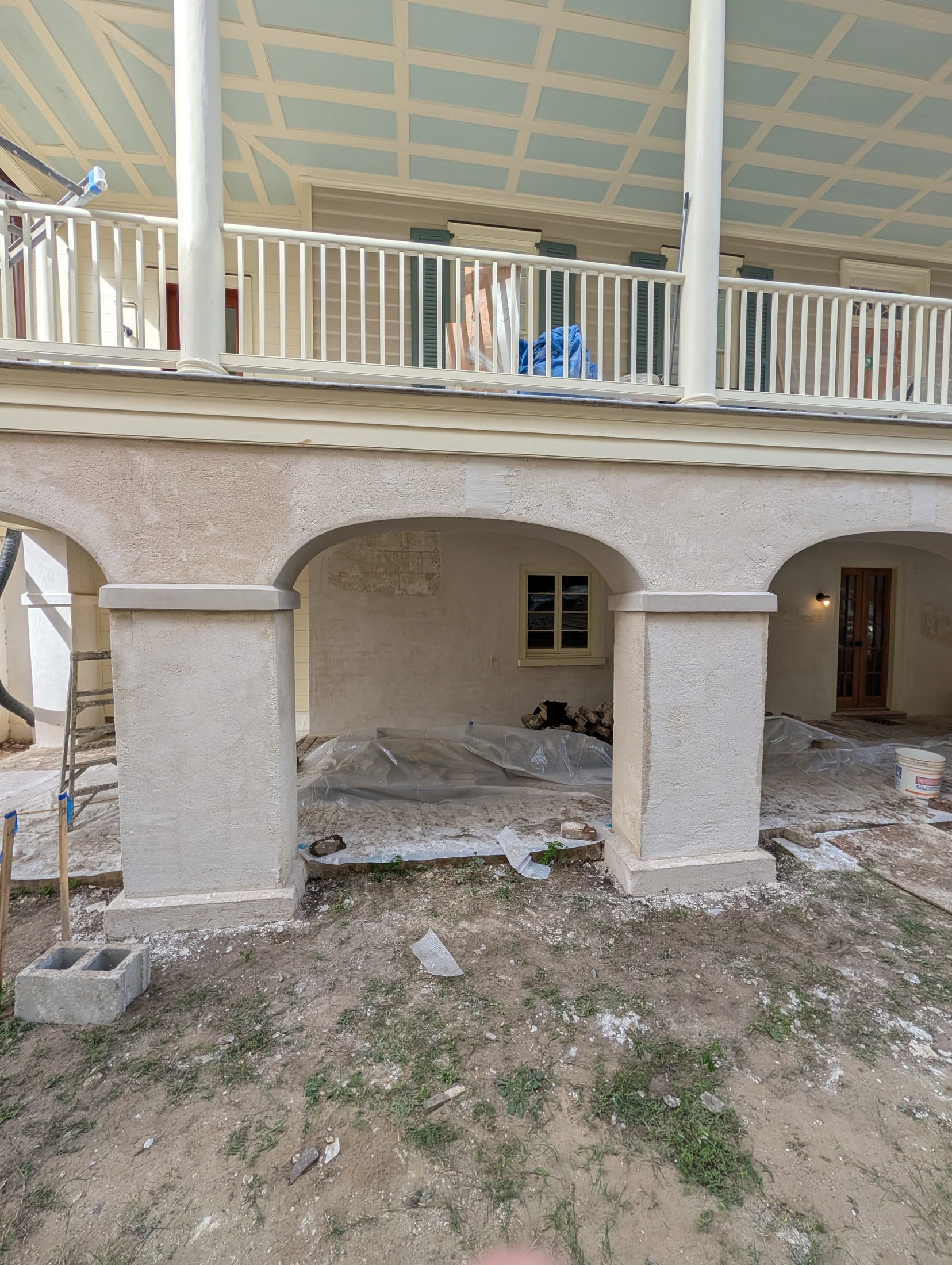
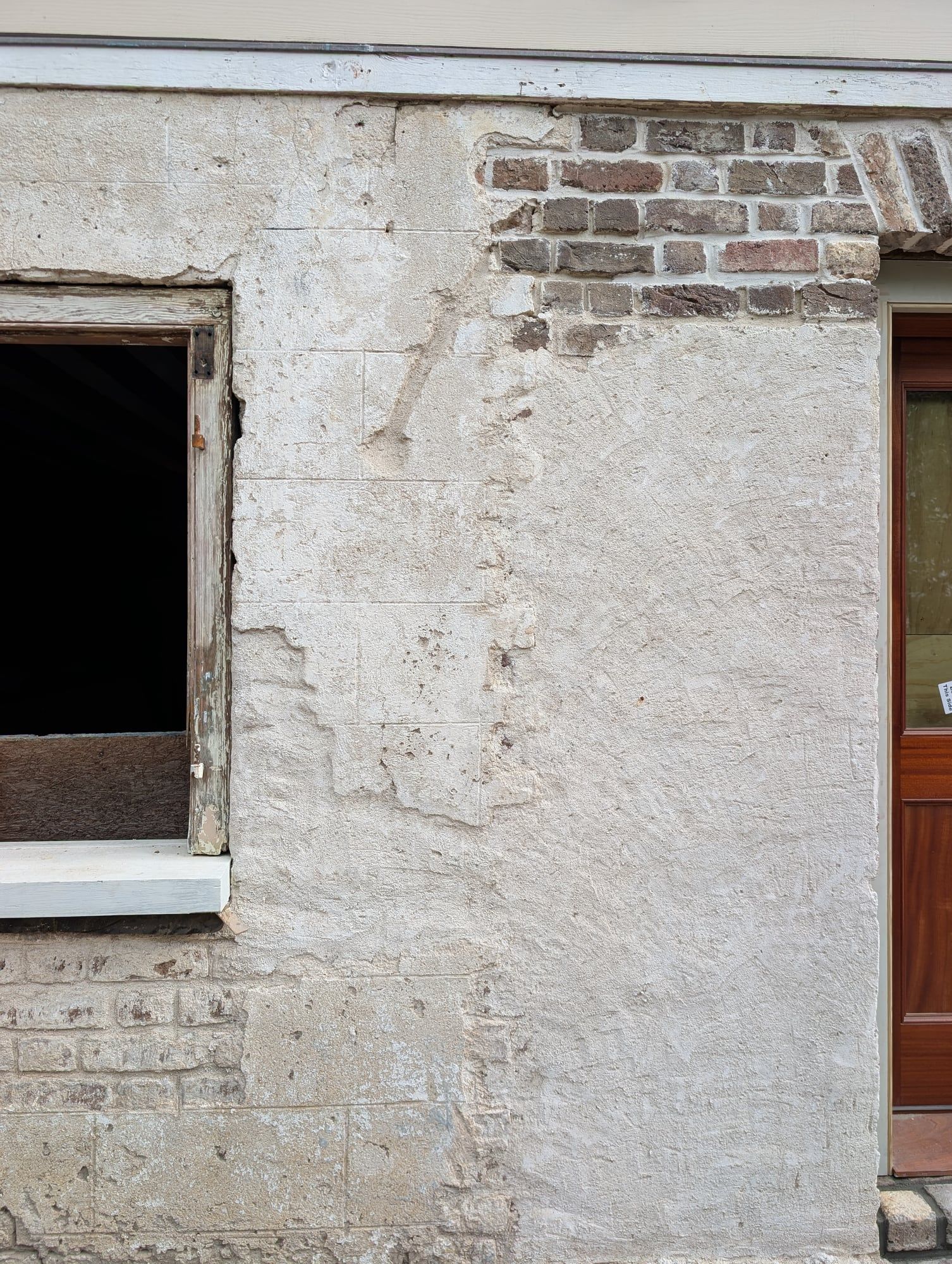
A historic single house whose stucco had cracked, patched and let go of the brick in places. Charleston stucco was lime and sand, made to move with soft brick and let it breathe, and the repairs had to be made the same way.
What we chose
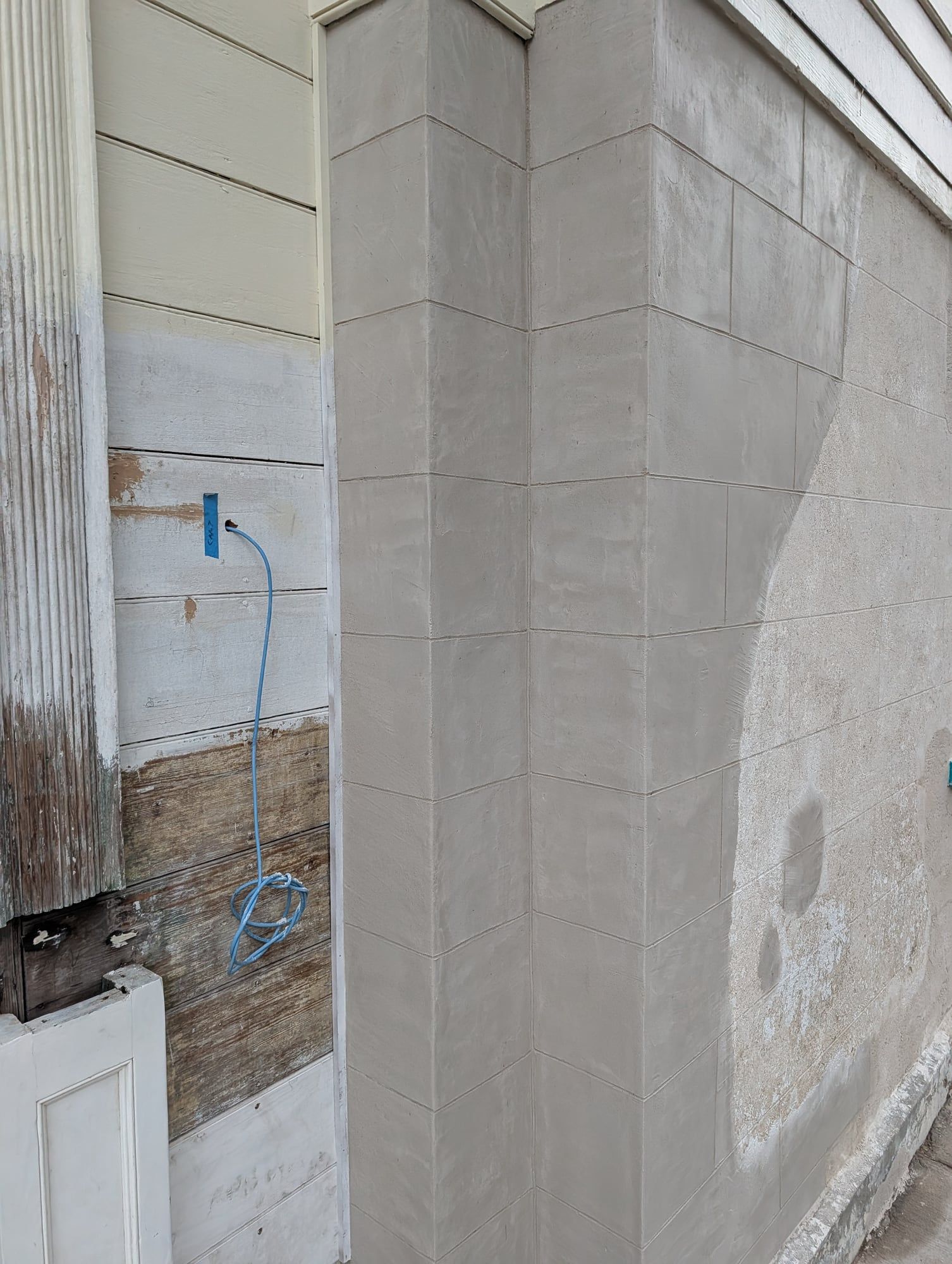
Go back to the way it was built. Loose and incompatible material taken back to sound. Type S lime slaked to putty and mixed with sand, applied straight to the masonry with no lath. The walls leveled in lime, then ashlar lines laid out, coursed and struck to read as cut limestone.
What it is becoming
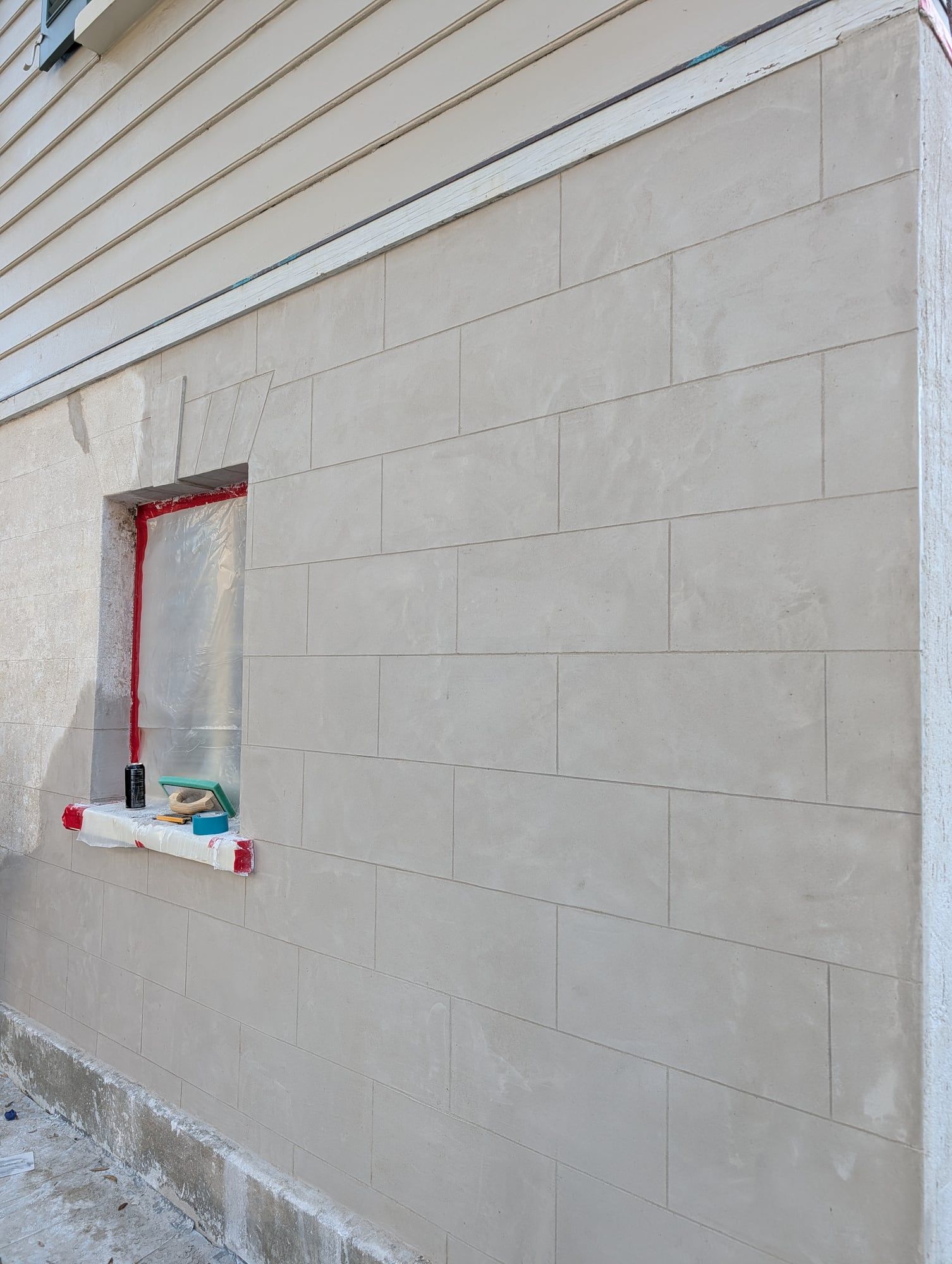
Walls and an arcade that read as dressed stone again, in a lime finish that can flex with the house and give up its moisture, the way the original builders intended.
Back to lime, then back to stone.
Every coat goes on the way the house was first finished, and the ashlar is the last and most exacting step.
-
 01
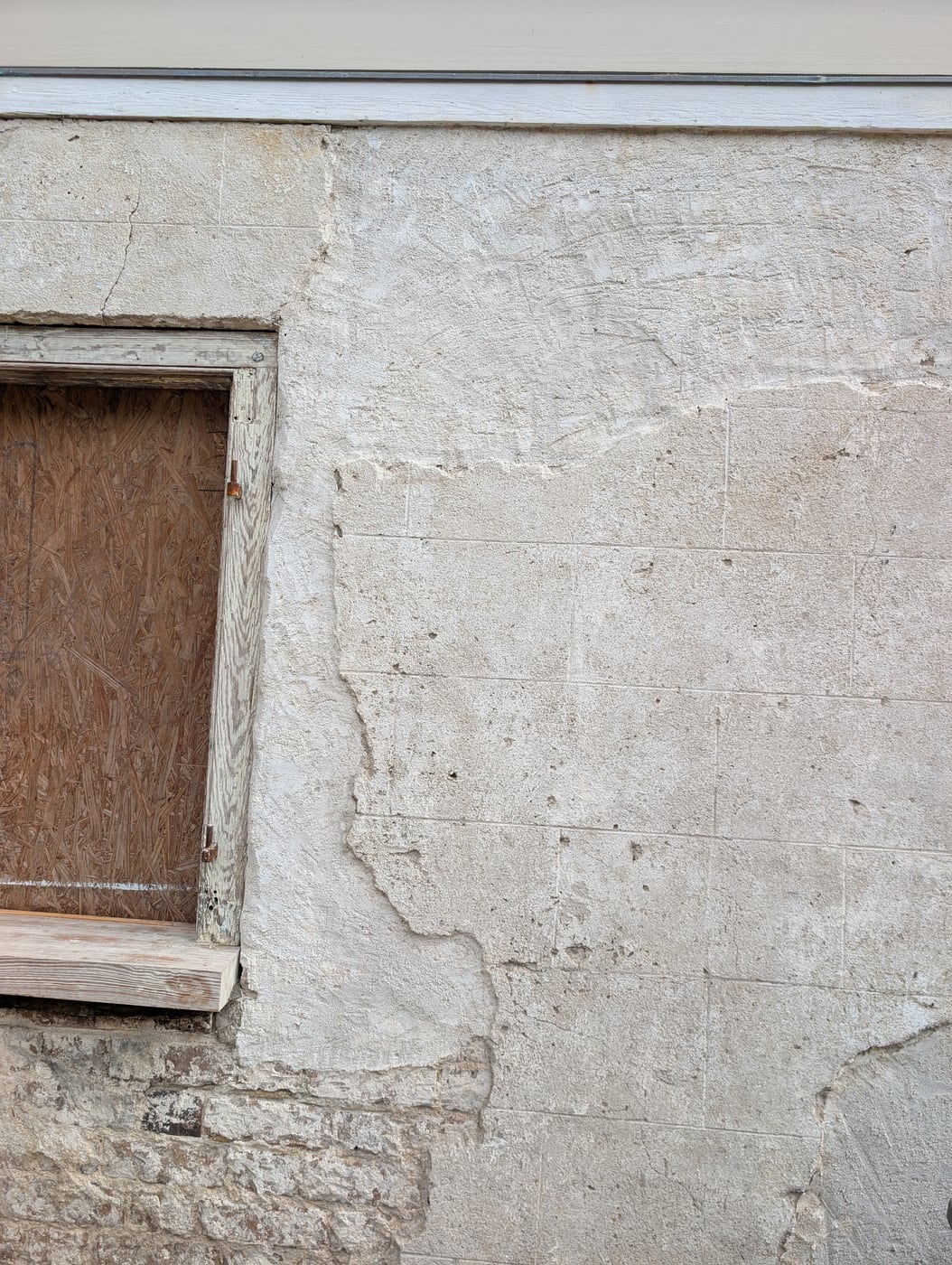
Read the wall
Where the old coats had cracked and let go, and where earlier patches no longer matched the wall around them.
-
 02
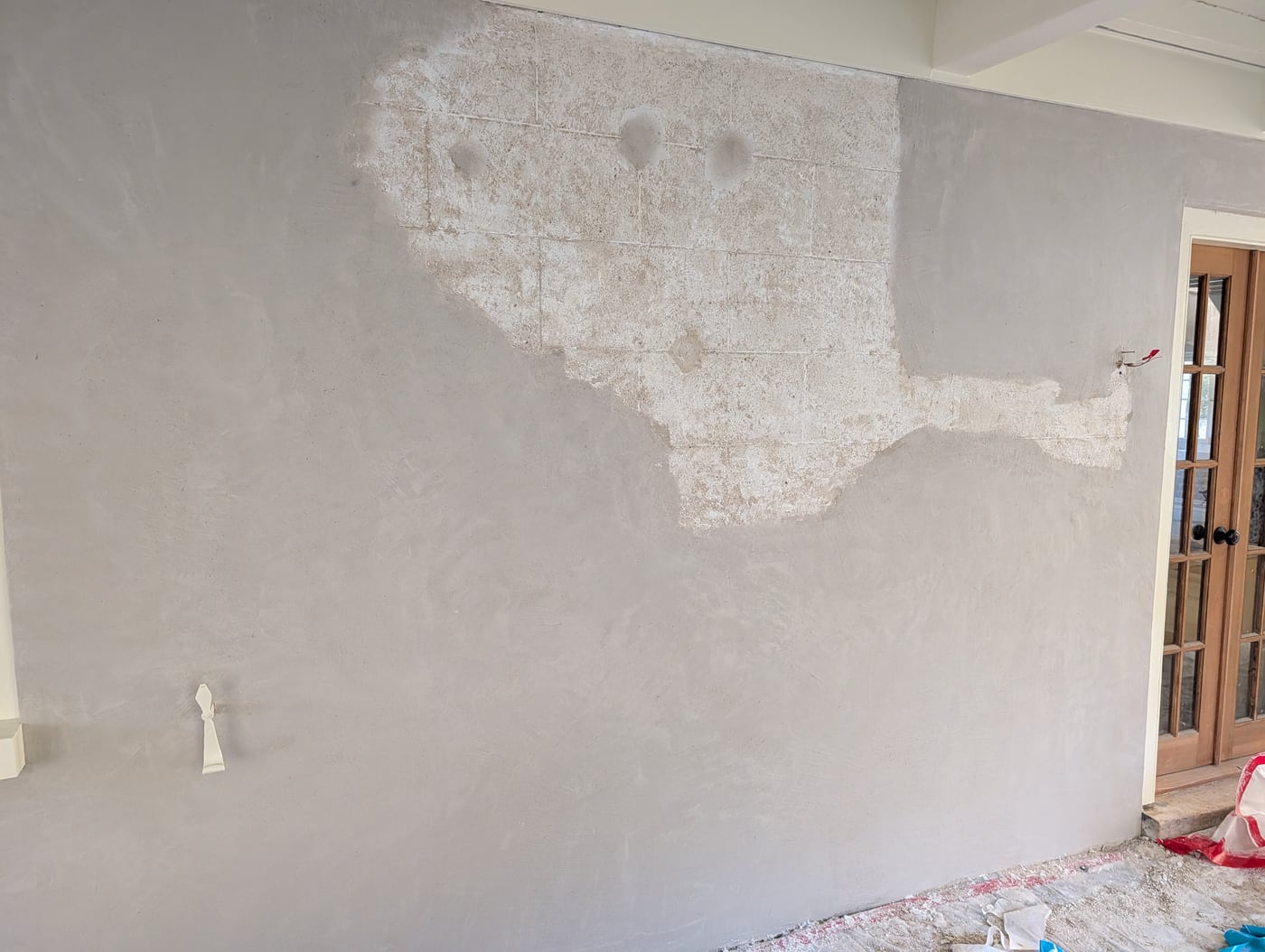
Back to sound
Loose and incompatible material taken off until what remains is bonded and sound.
-
 03
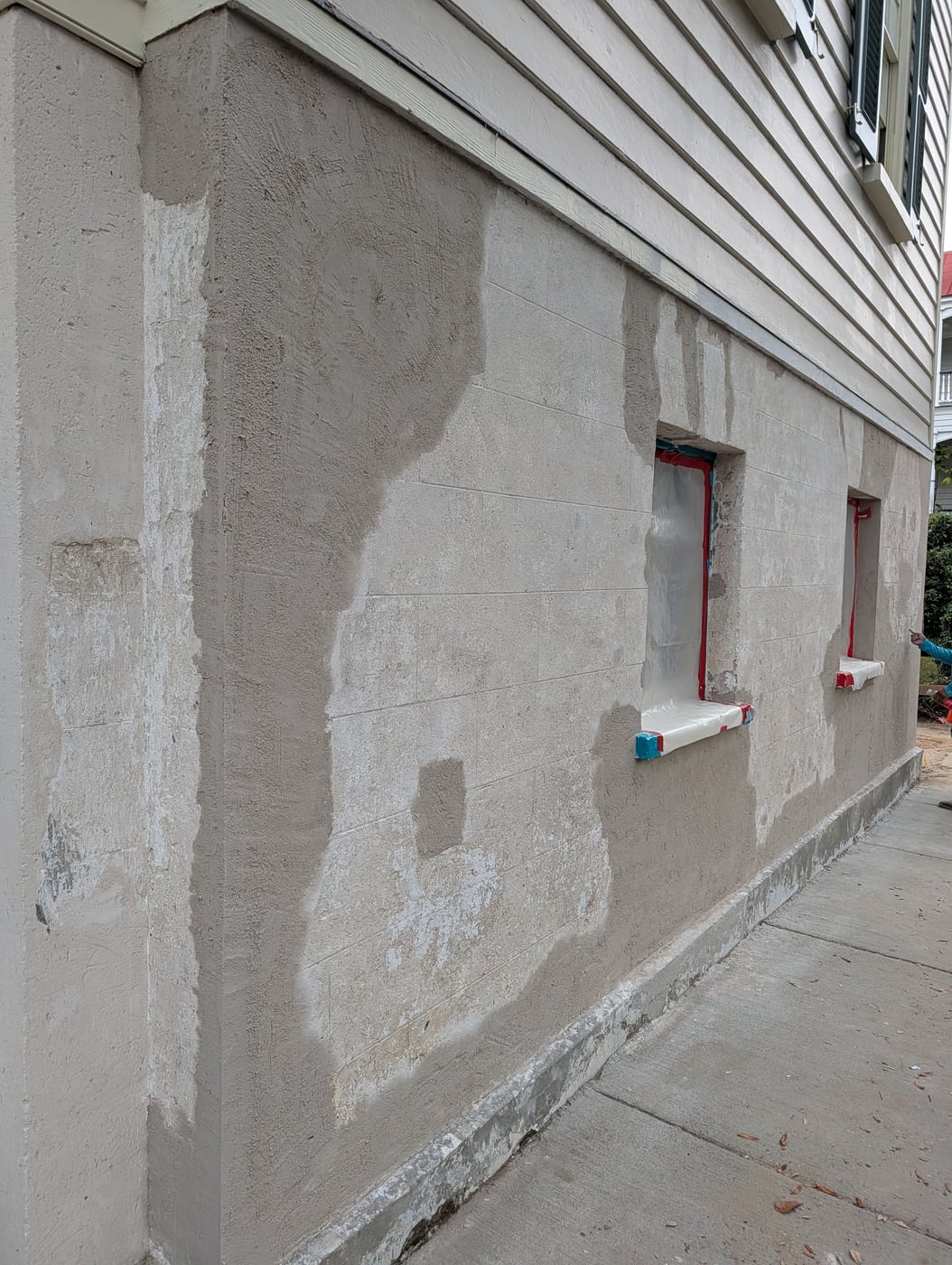
Leveled in lime
Type S lime, slaked to putty and mixed with sand, worked into the open areas to bring the wall back to one plane.
-
 04
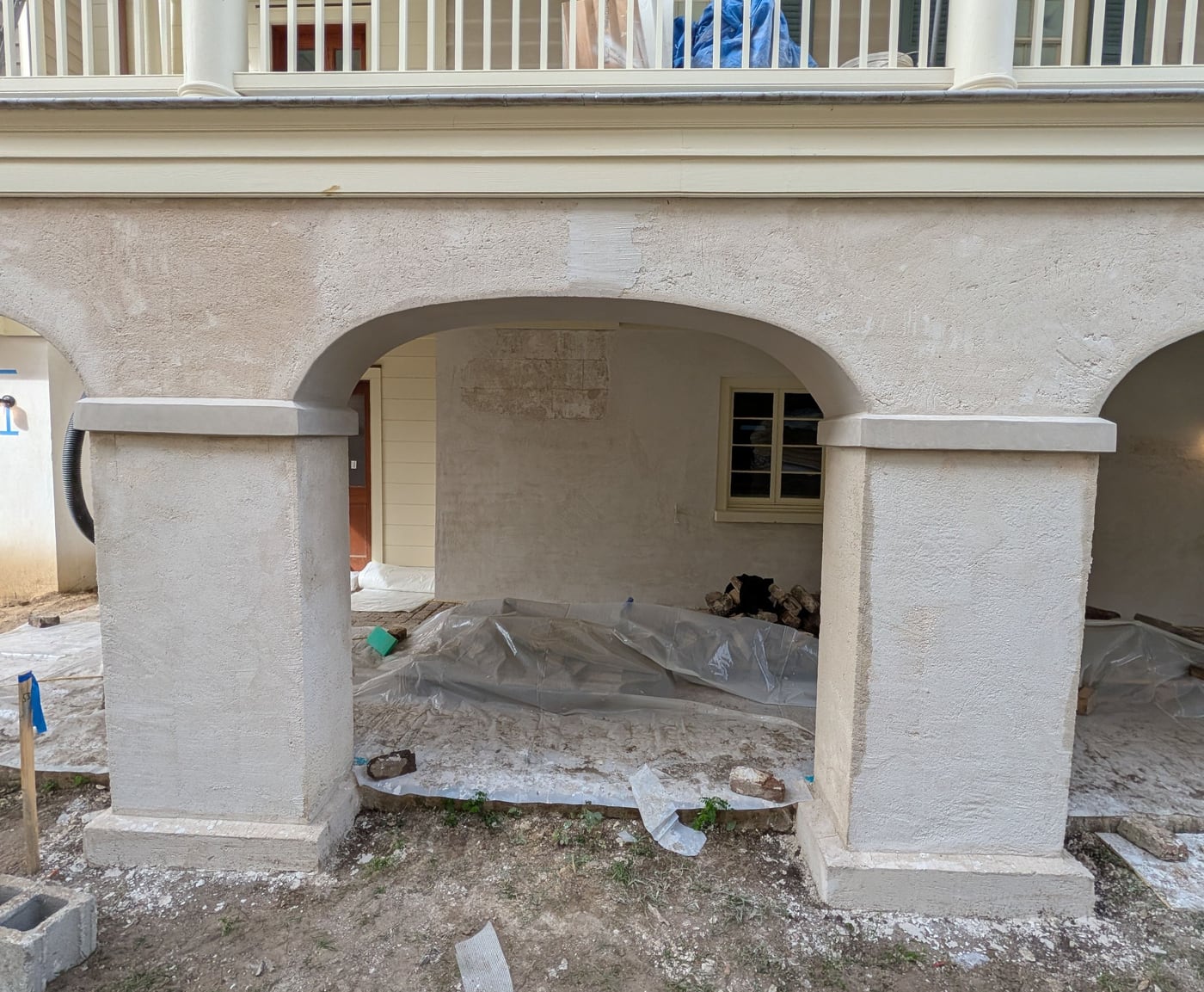
Arches and bands
Arches, imposts and bands run in lime first, so the coursing has edges to land on.
-
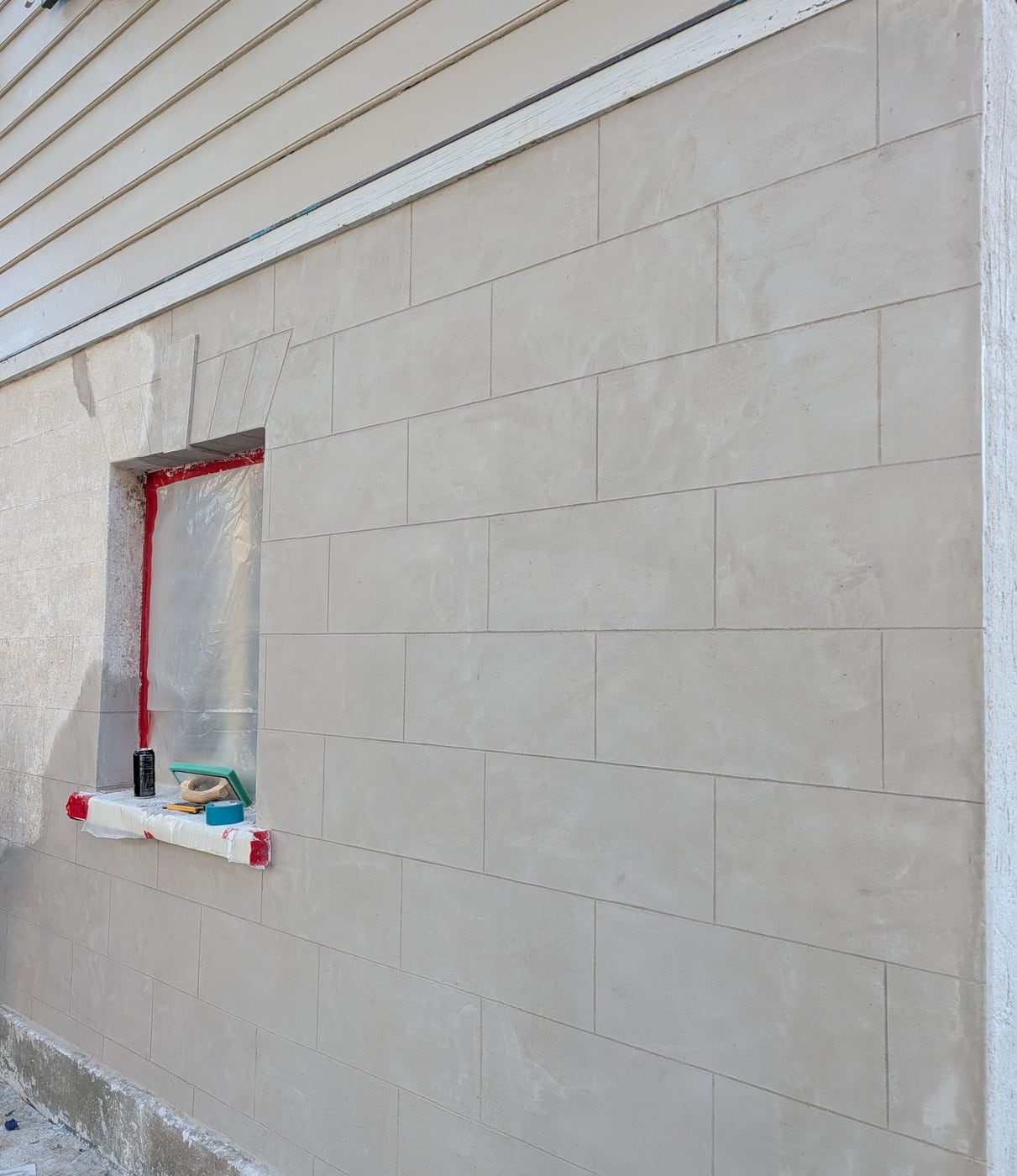 05
Ashlar struck
Courses laid out, broken around each window the way stone would be, and struck while the finish is still green.
-
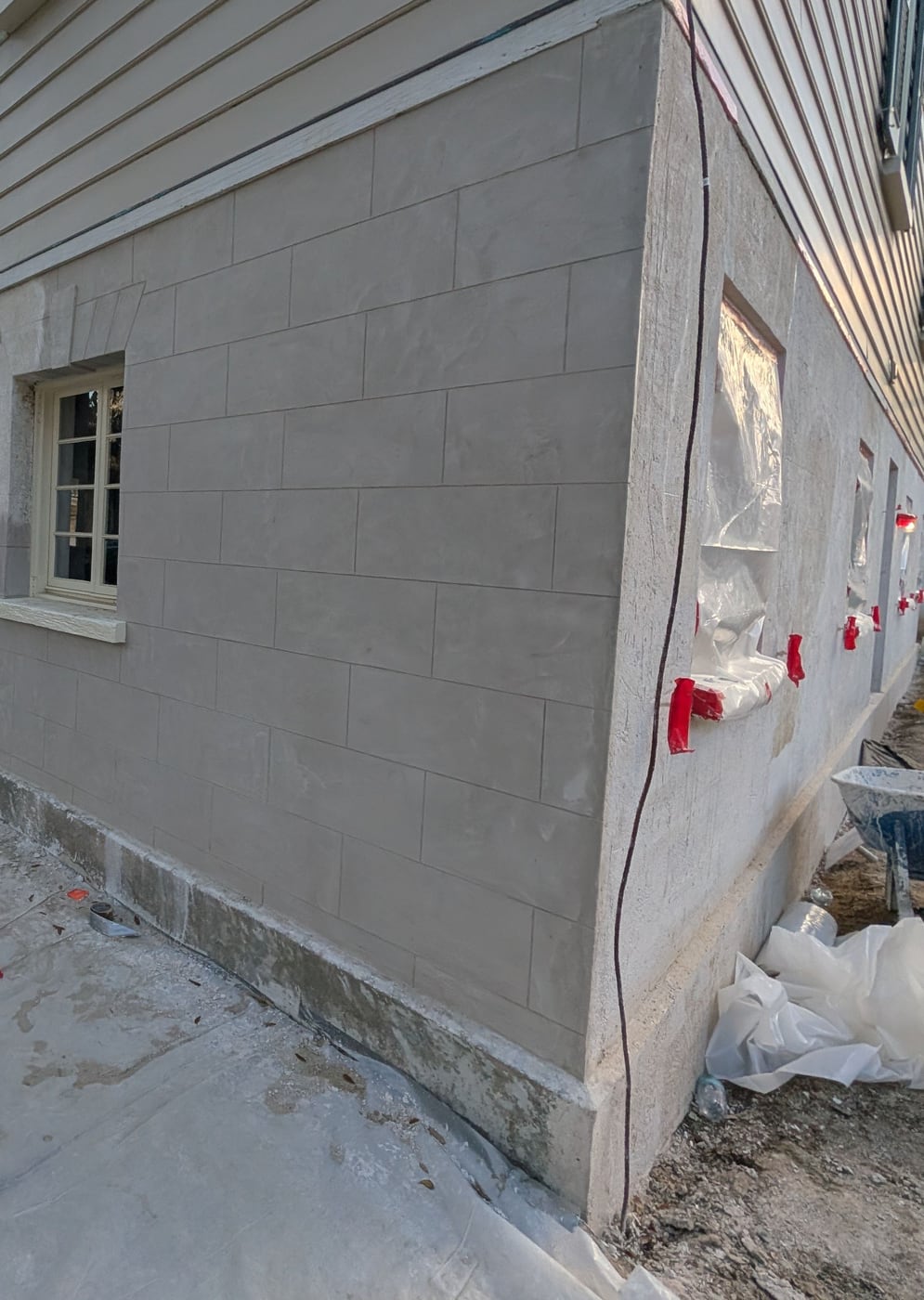 06
Reading as stone
From a few steps back, the lime reads as dressed limestone.
Lime, by hand.
The house is being finished elevation by elevation. These are the coats going on and the walls that are done so far.
In progress
-
The finish coat Lime troweled over an arch pier below its impost band. -
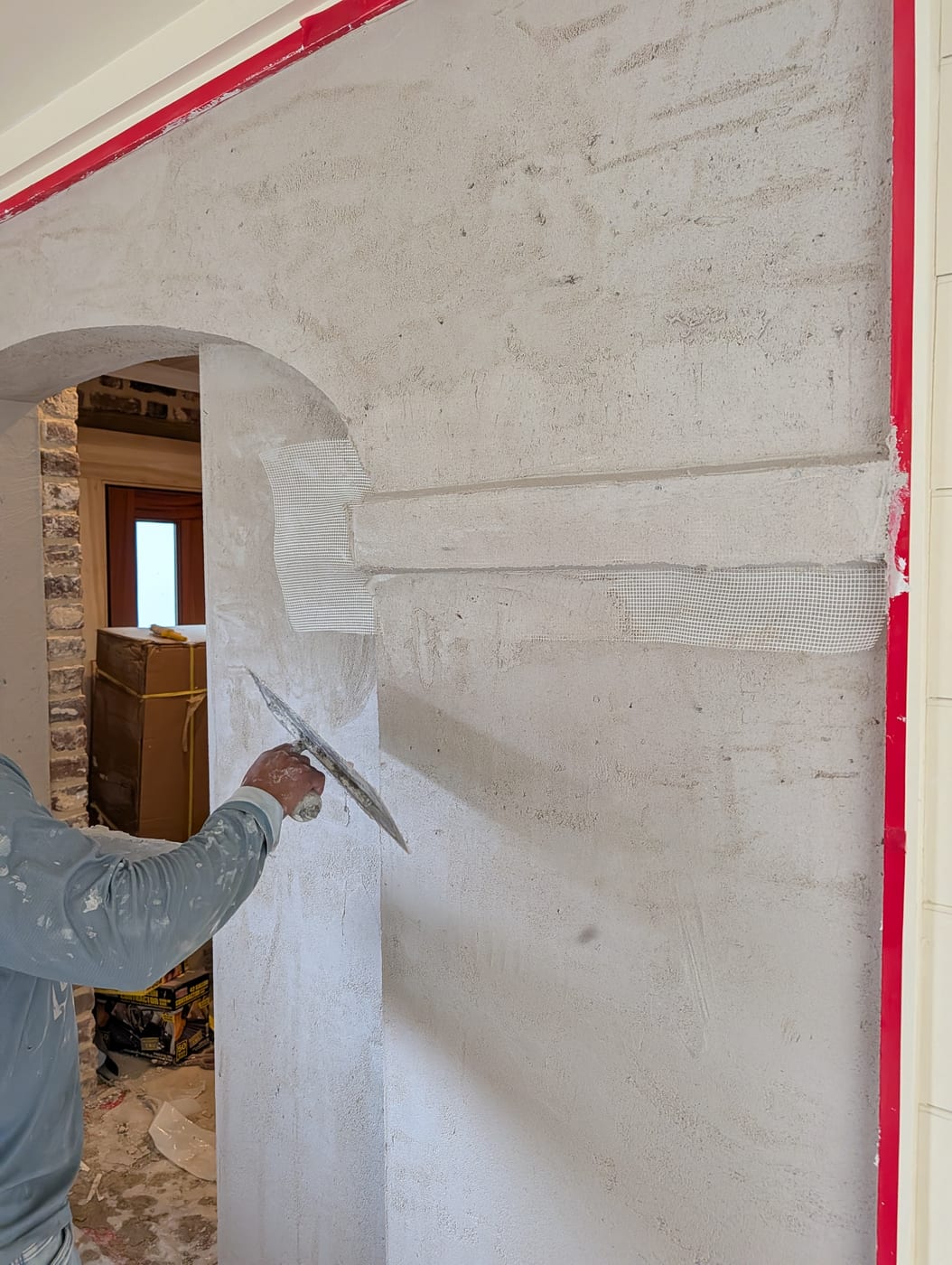
Coat by coat A pier brought up in lime between its arch and the band above. -
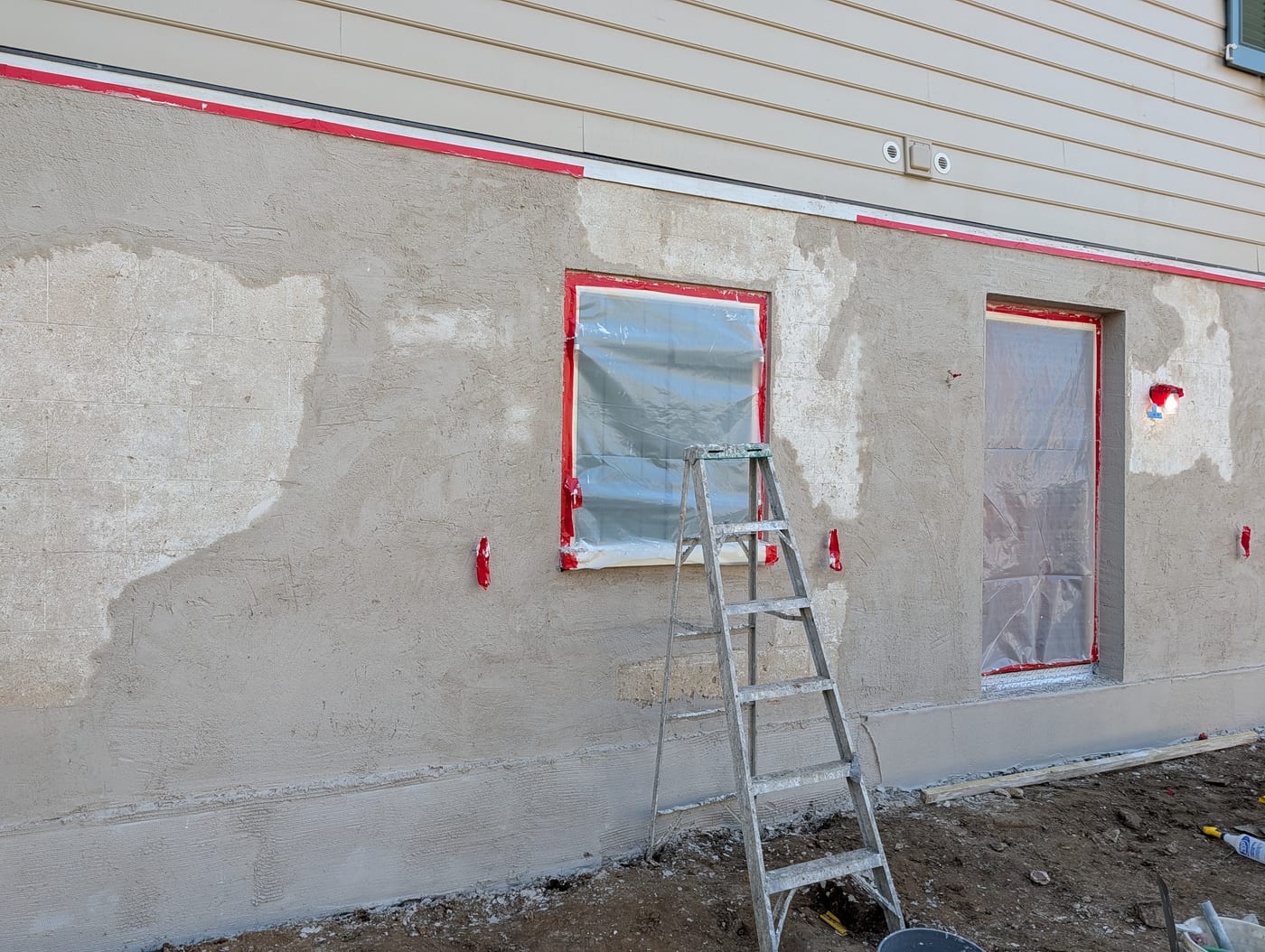
Leveling Open areas filled in lime to bring the wall back to one plane.
Finished so far
-
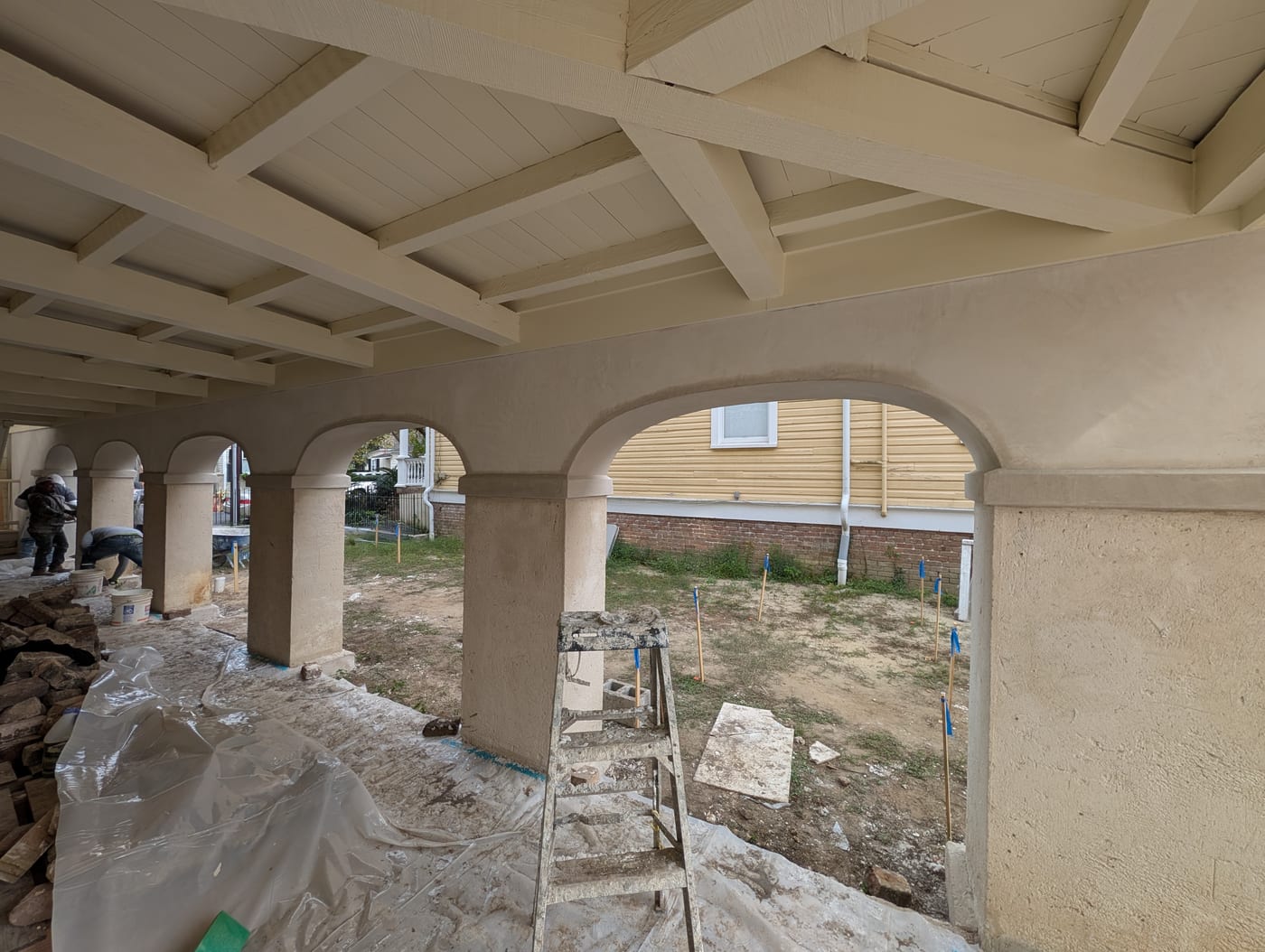
The arcade, piers and arches in ashlar. -
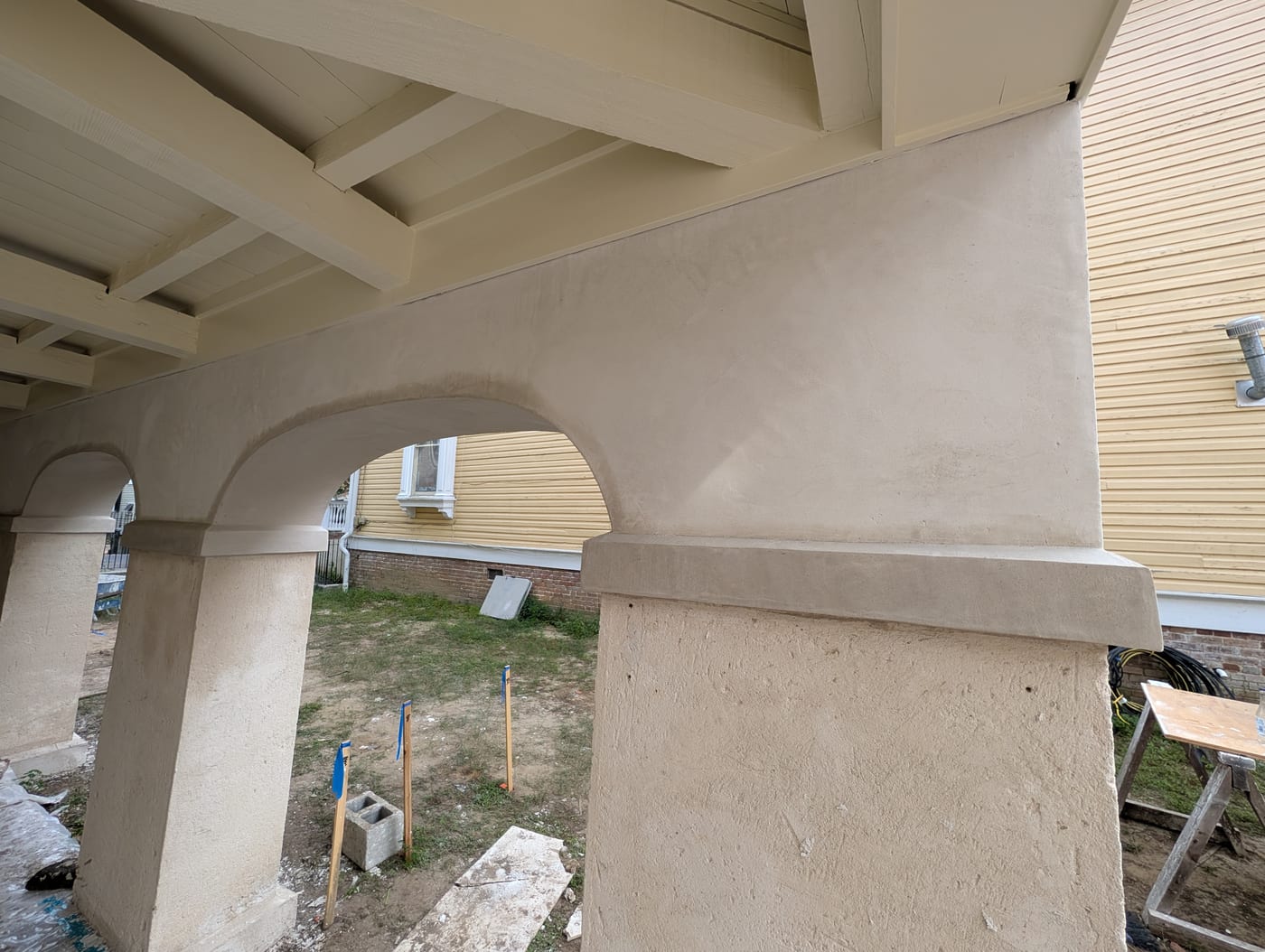
Pier and arch spring. -
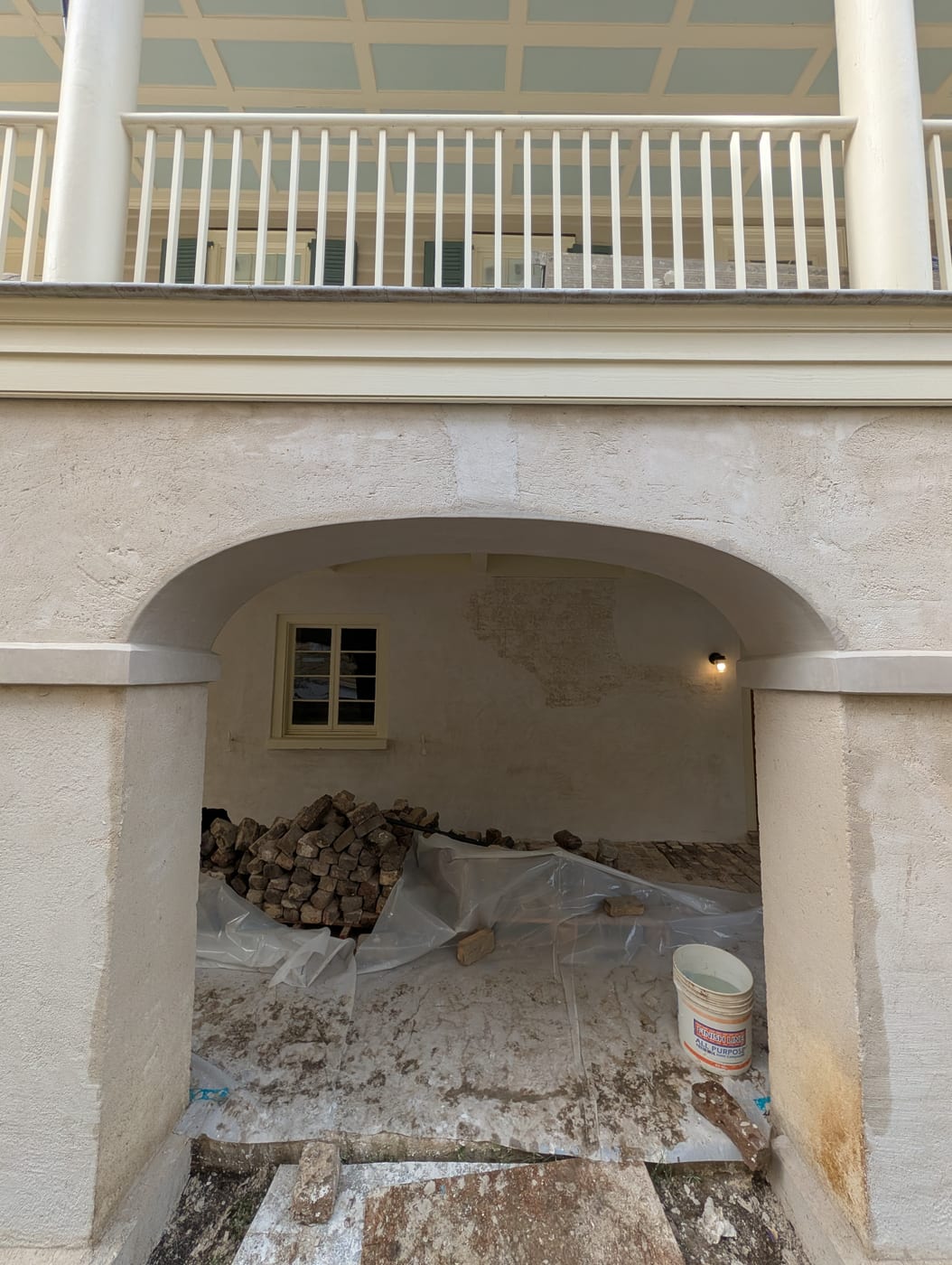
One bay, finished. -
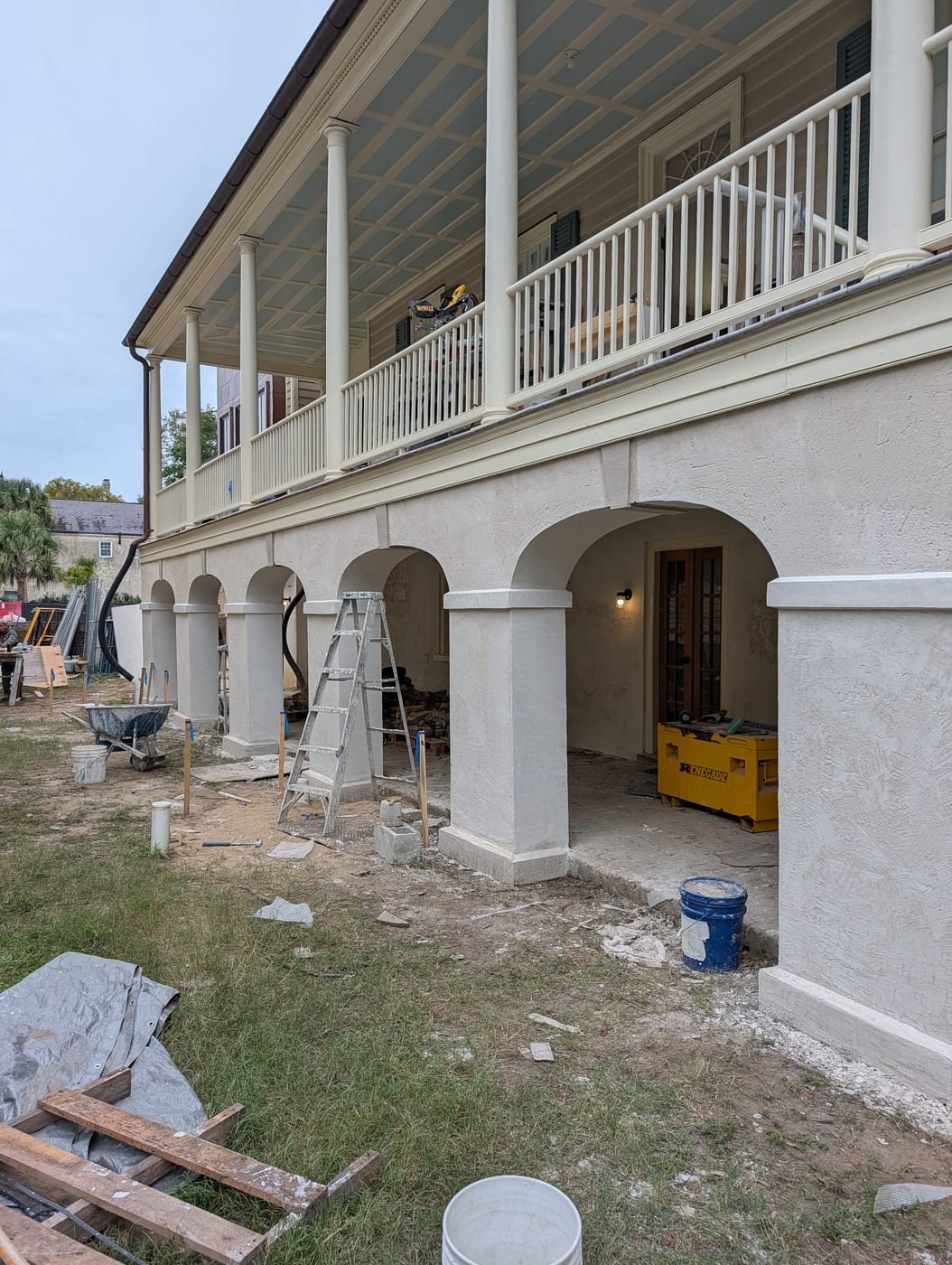
The length of the arcade. -
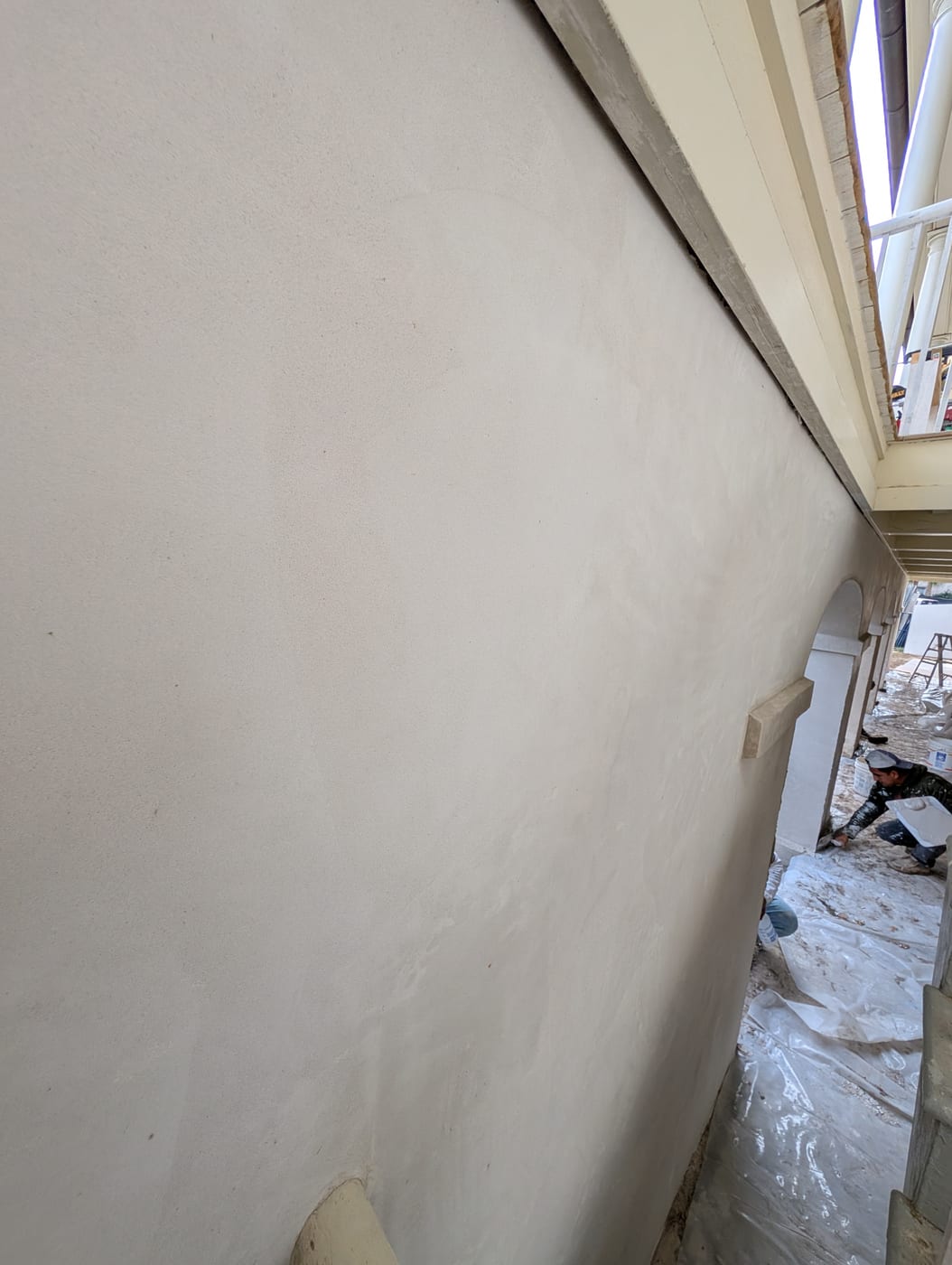
Flat finish on the side wall. -
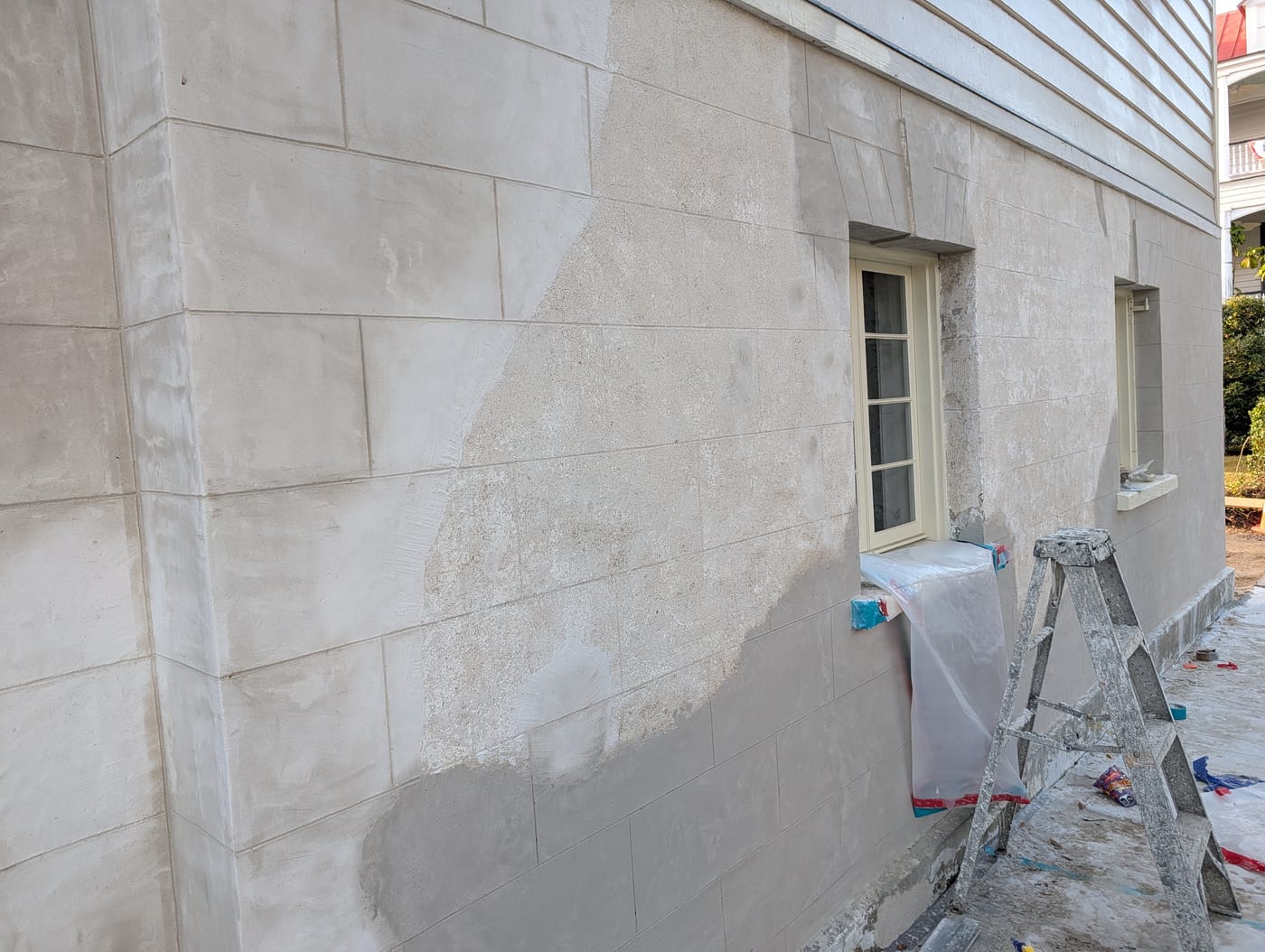
Fresh lime meeting finished courses.
Lines that read as cut stone.
Ashlar is the slowest part of the job. Every course is set out to land evenly, turns the corners the way a block would, and is struck while the lime is still green so the joint stays crisp.
The lines
-
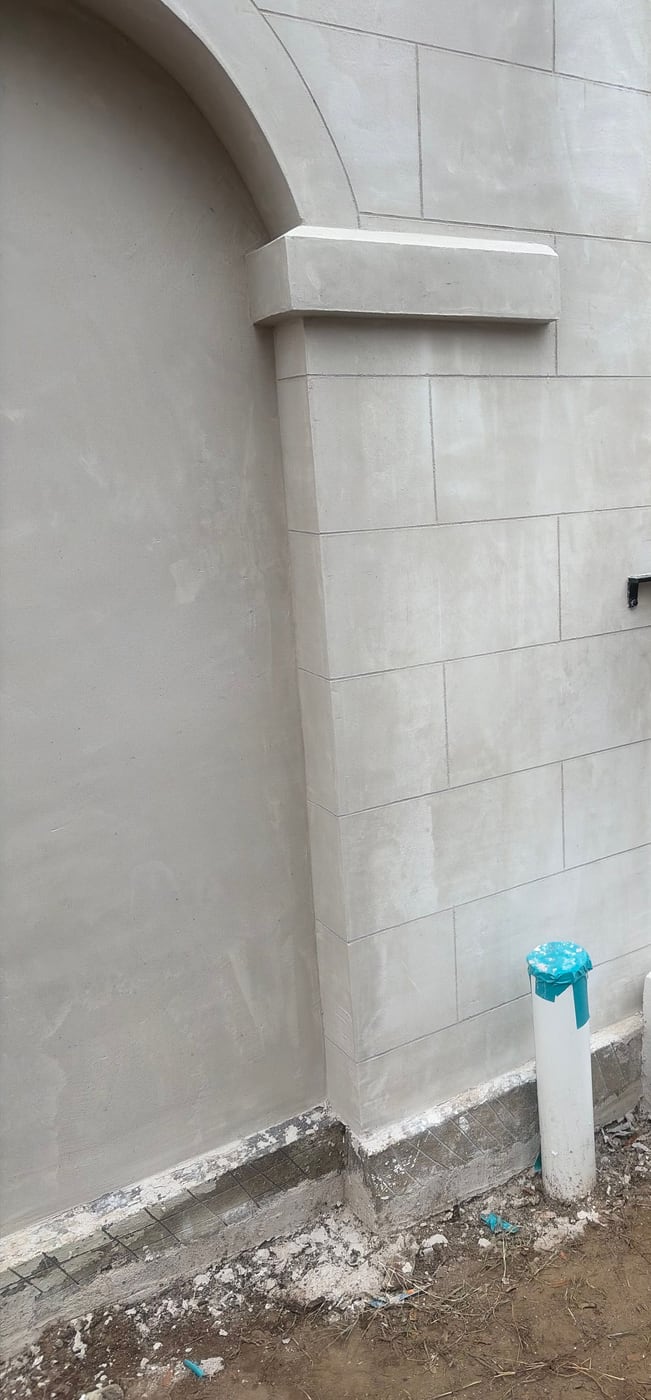
A pier finished below its arch and impost. -
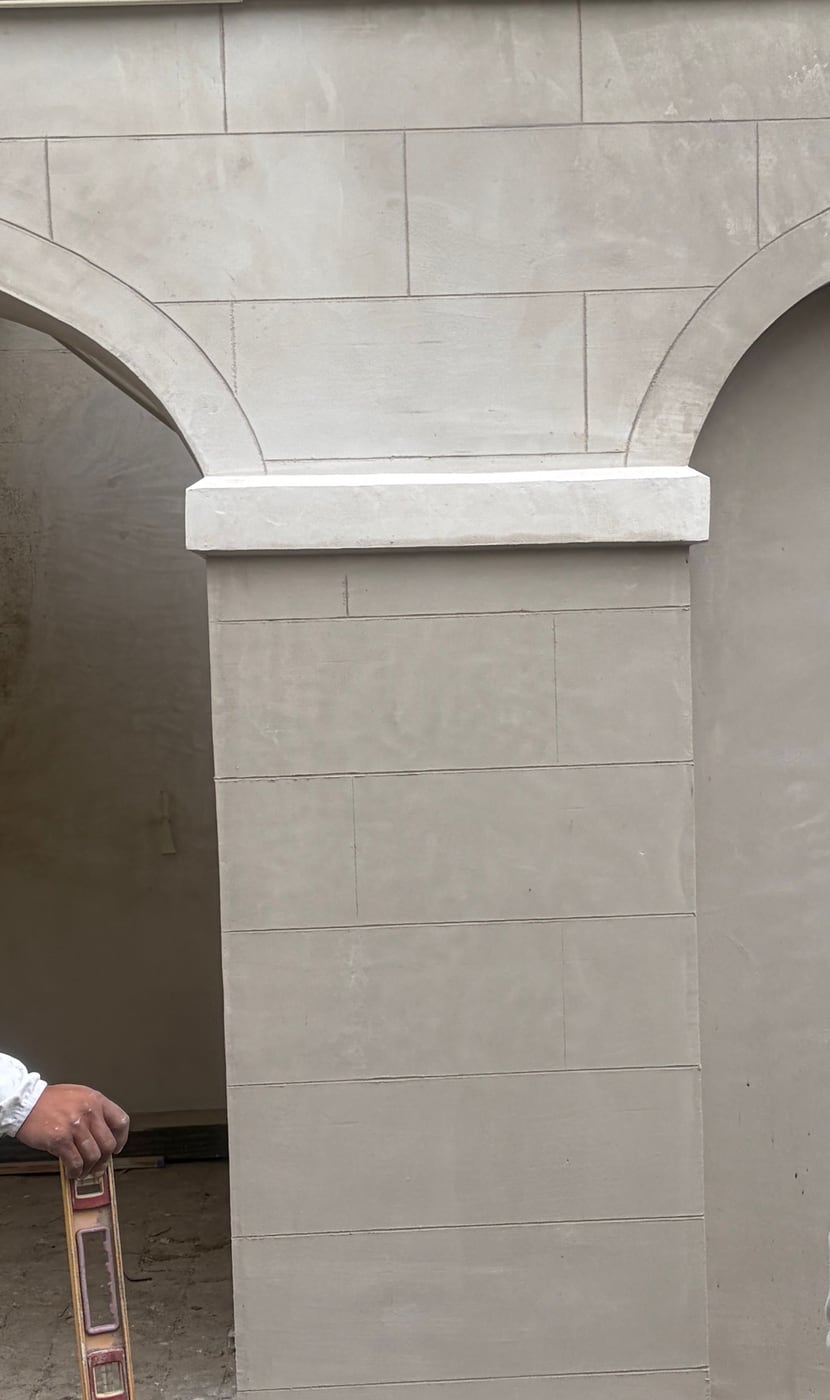
Courses struck between two arches. -
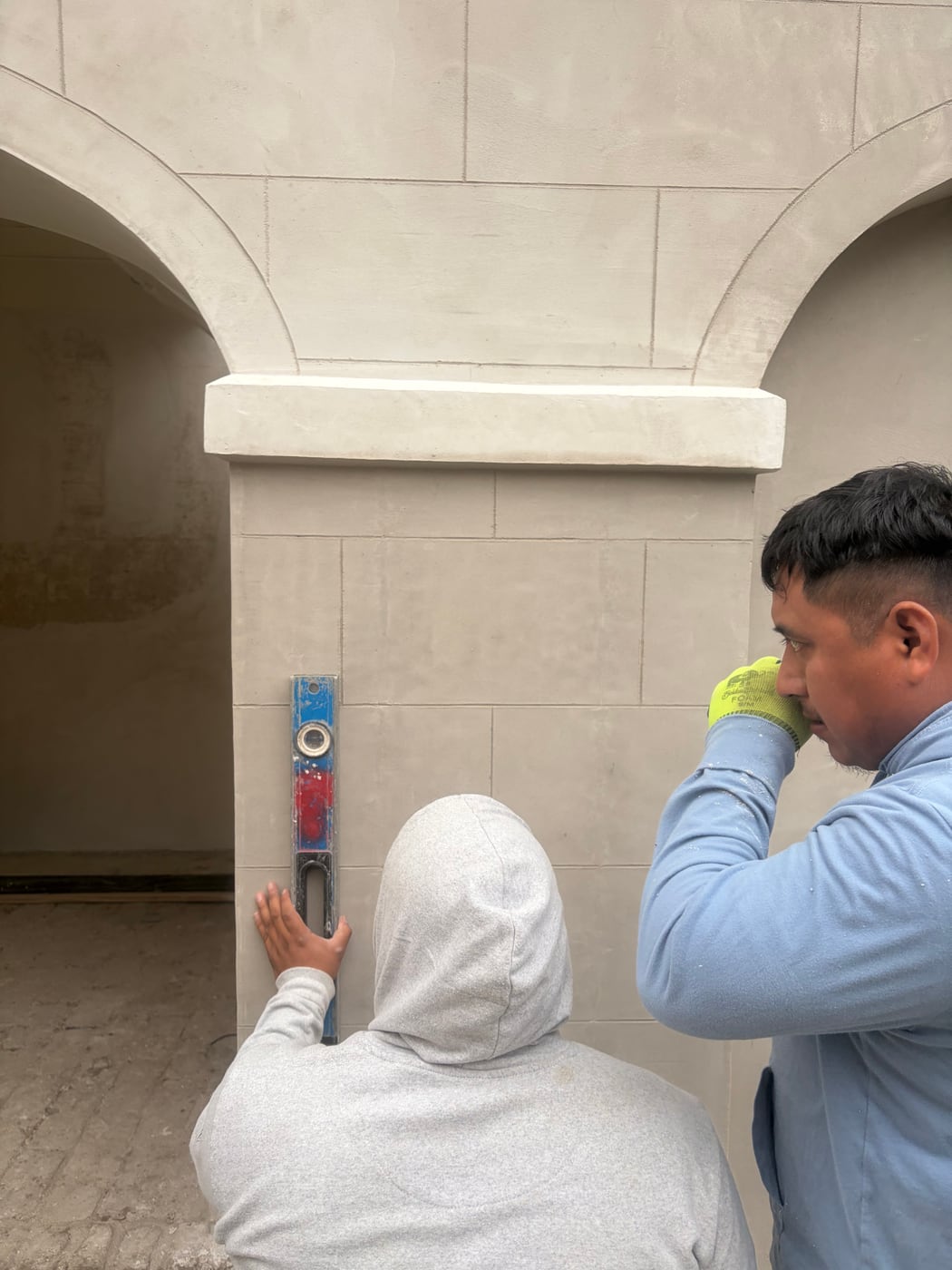
Our crew setting the lines, level in hand. -
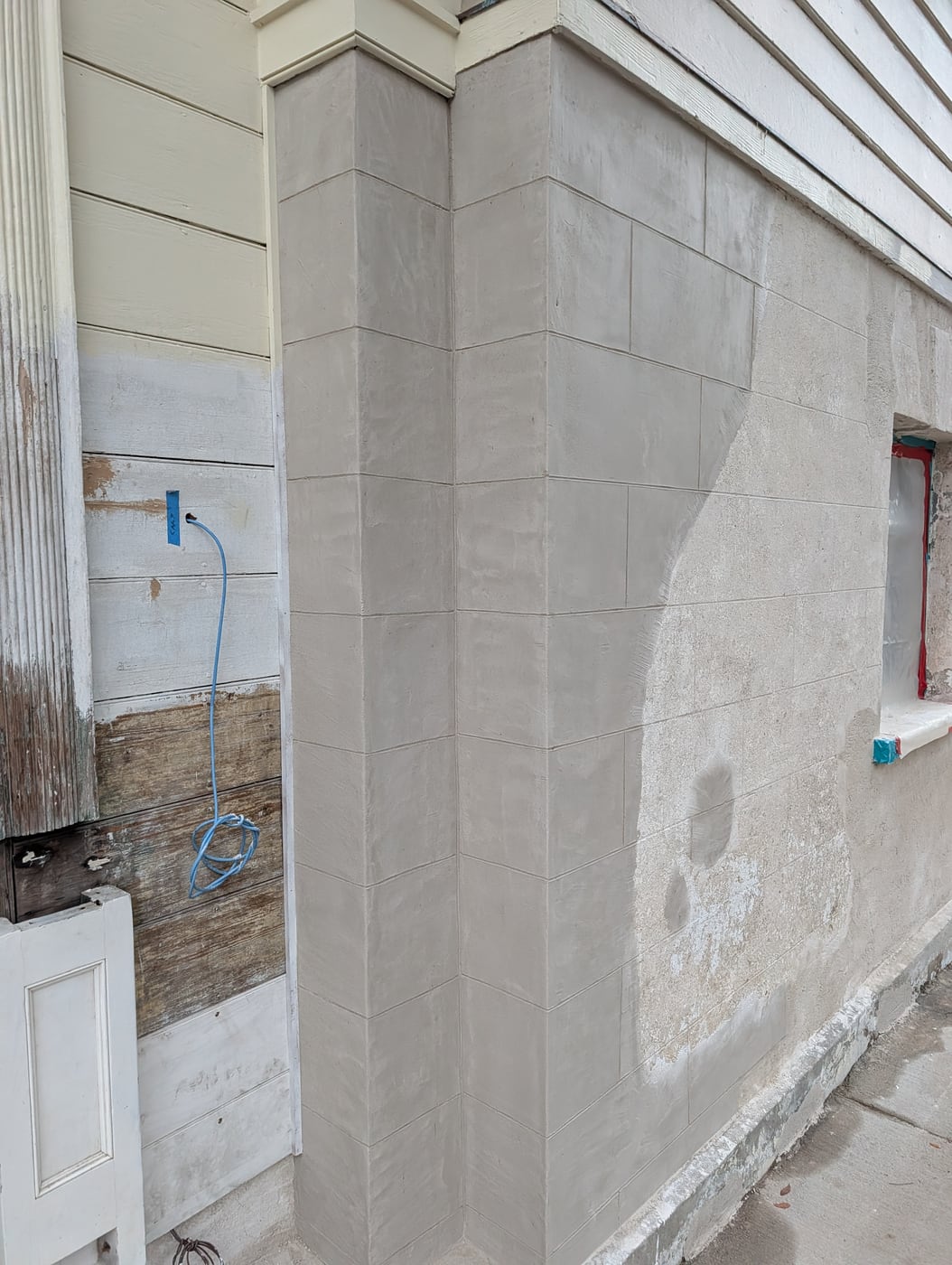
The corner turns like a block would. -
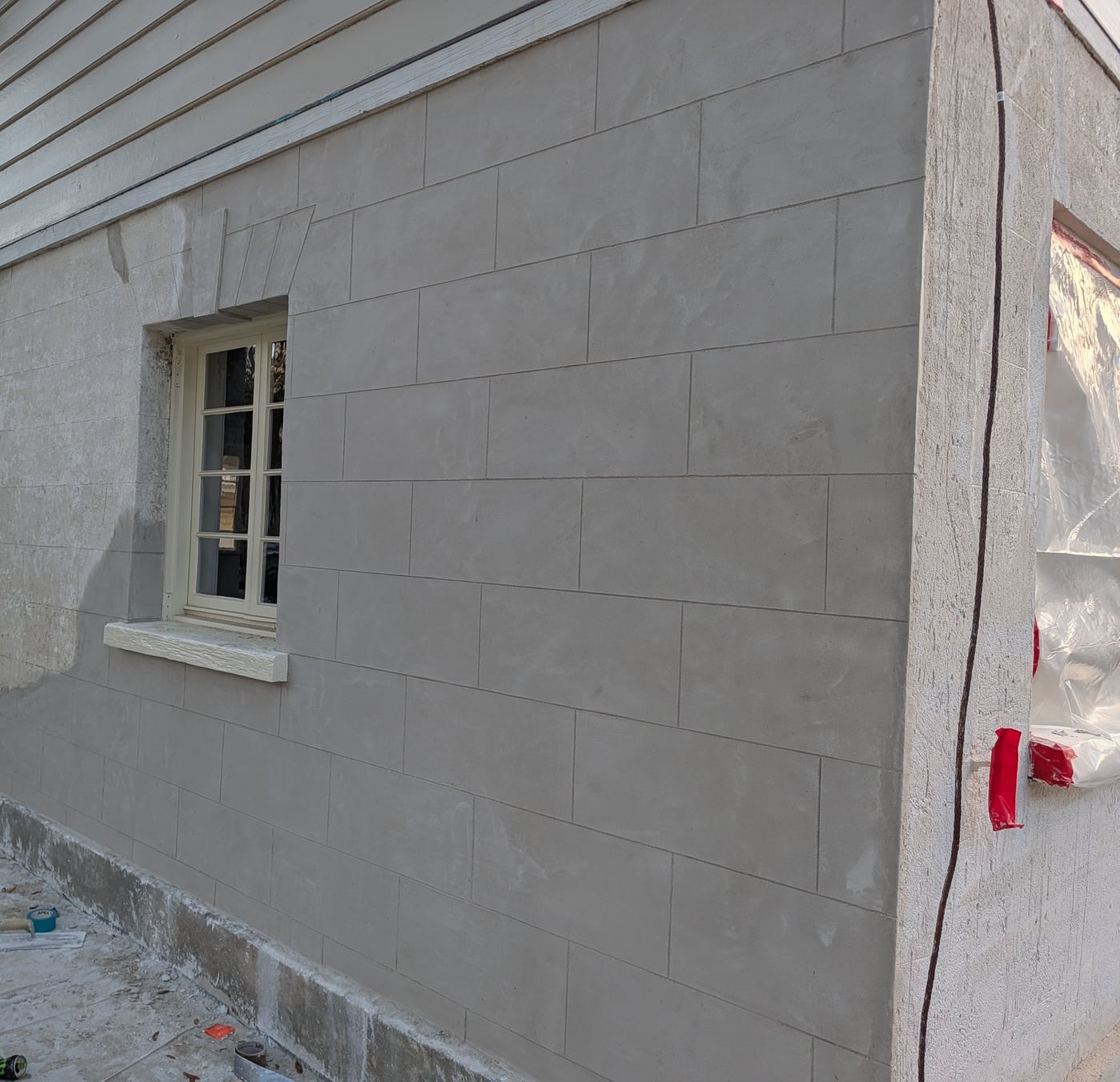
A full elevation in coursed ashlar. -
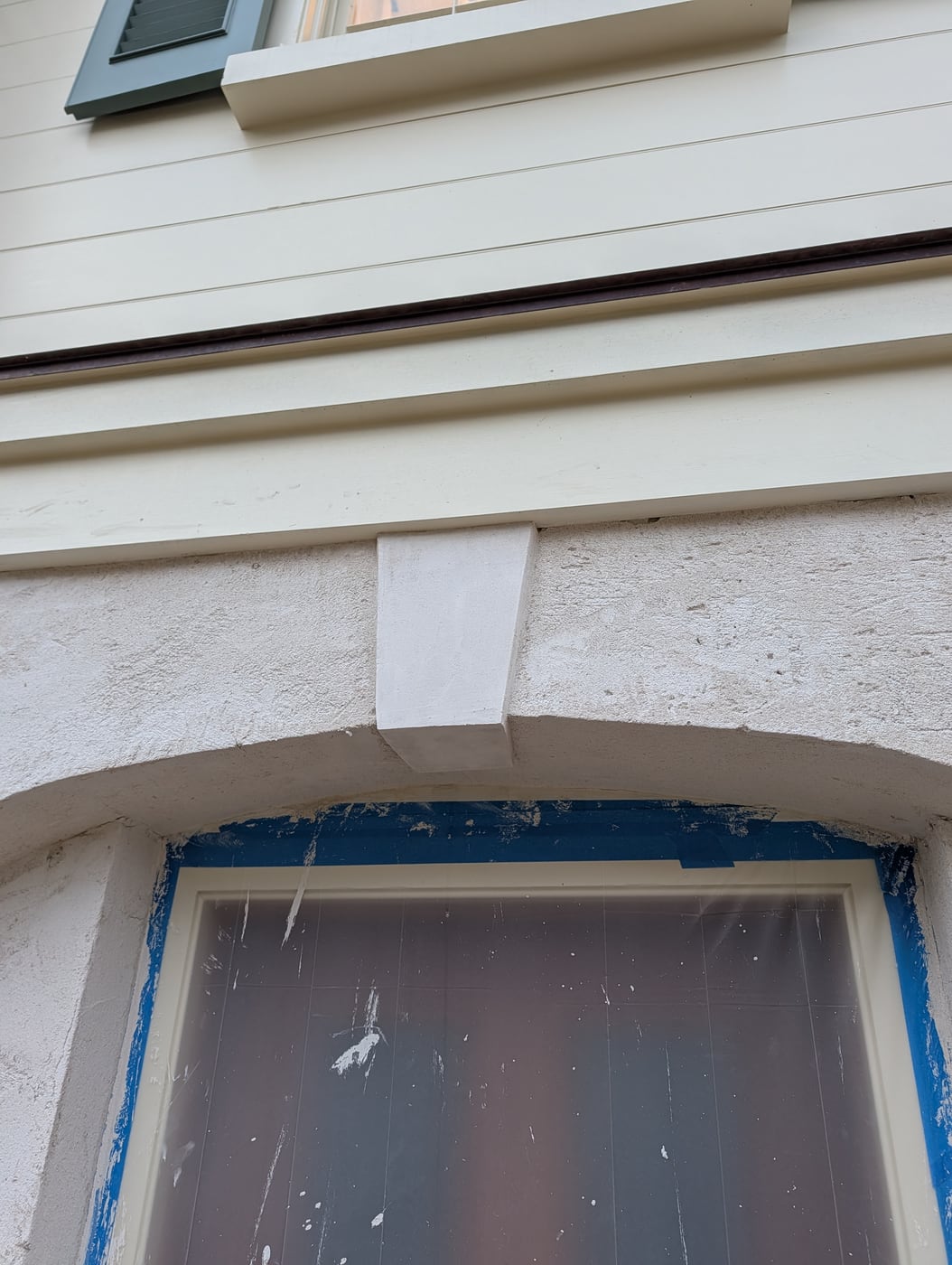
Keystone and band over an arched opening.
Historic Charleston stucco was never meant to be hard. It was lime and sand over soft brick, a skin that could move a little, take on water and give it back. On this house the old coats had cracked, let go of the brick in places and been patched over the years with whatever was at hand.
So the work starts by going backward. Loose and incompatible material comes off until the wall is sound. The lime is Type S, slaked to a putty before it is mixed with sand, and it goes straight onto the masonry with no lath, the way the original coats did. The walls are leveled in lime first. Only then are the ashlar lines laid out, coursed around every window and arch, and struck while the finish is still green, so the stucco reads as cut limestone from across the street.
Ashlar is the part that takes the longest to learn. The courses have to land evenly on every elevation, break around openings the way stone would, and stay straight across a wall that is not. This page follows the work as it goes.