Defined by the difficulty of the work, not the age of the building.
Charleston Brothers Construction takes on work that is genuinely hard to do well, heritage restoration and modern building alike. The standard is identical either way: understand the structure, choose the right method, coordinate carefully, execute with control.
We filter out commodity, lowest-bid work. That filter is what protects the craft, and it is what every client of ours is actually buying: the judgment to do the difficult thing correctly.
The company is led by Casey Bearsch, an architecture-trained builder, technologist, and preservation-focused contractor. He diagnoses what is happening behind the wall before specifying a repair, and he holds new construction to the same discipline.
Charleston Brothers Construction, Inc. is an independently owned South Carolina corporation, founded September 23, 2002 and registered with the South Carolina Secretary of State under entity number 00085389. The company is authorized by the South Carolina Residential Builders Commission under Certificate of Authorization RBC 1152. It operates as a service-area business based in Mount Pleasant, South Carolina, serving Charleston and the surrounding Lowcountry.
The lineage runs by descent from Anderson Lumber Company, documented in Charleston in 1890, from supplying the Lowcountry's building materials to restoring the buildings those materials made. We are not a company that dates to 1890. We are a family that does, and we build like it.
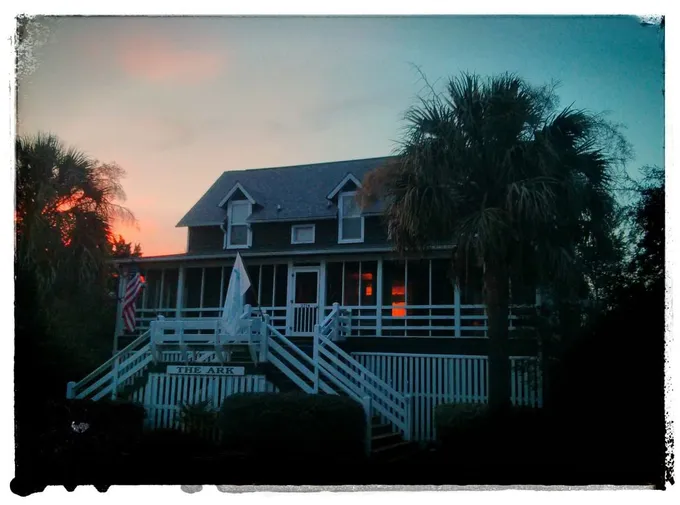
The record is independent of us. The Charleston Museum's photograph collection holds a streetscape from around 1900 documenting the Anderson Lumber Company's lumber yard in the city. The Library of Congress holds the 1902 exposition souvenir that photographed the company's office, mills and river front. Samuel Pickens Anderson's built work still stands on Sullivan's Island. The lineage runs by descent; the buildings and the archives carry the proof.
Streetscape and lumber yard record: The Charleston Museum, Photograph Collection, Ashley Avenue, object MK 10381, c. 1900. The 1902 plate: Library of Congress, credited below. The Ark photograph: family archive.
In 1902 Charleston hosted the South Carolina Interstate and West Indian Exposition. The illustrated souvenir published for it set out the city's landmarks and leading businesses, and it gave a full plate to the Anderson Lumber Company: four photographs and a short account.
"One of the industries at the mouth of the Ashley River in Charleston which immediately commands attention is the lumber business. In the winter the lumber is rafted down the river, both sawed and in the log, and the river front is covered for miles. It is shipped principally up the coast, in sailing craft. The operations of the Anderson Lumber Company extend far up the rivers of the State, and illustrate one of the important lines of business of the city."
Charleston and the South Carolina inter-state and West Indian exposition, 1902
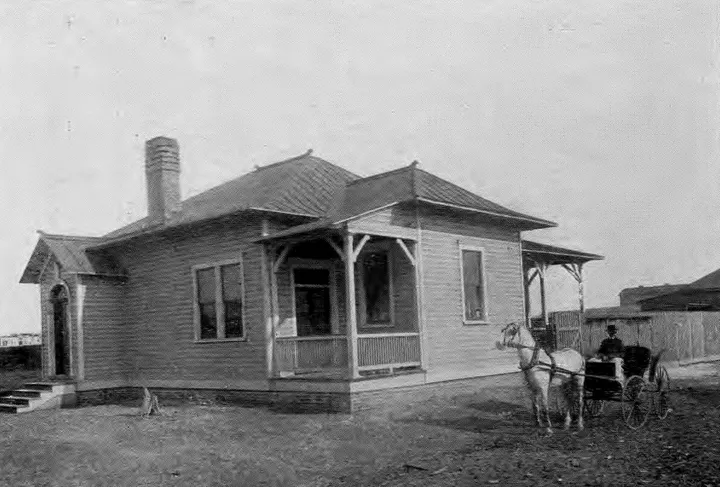
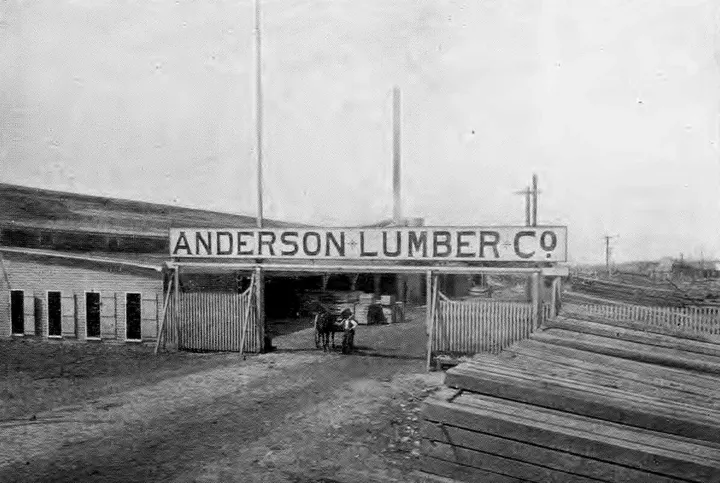
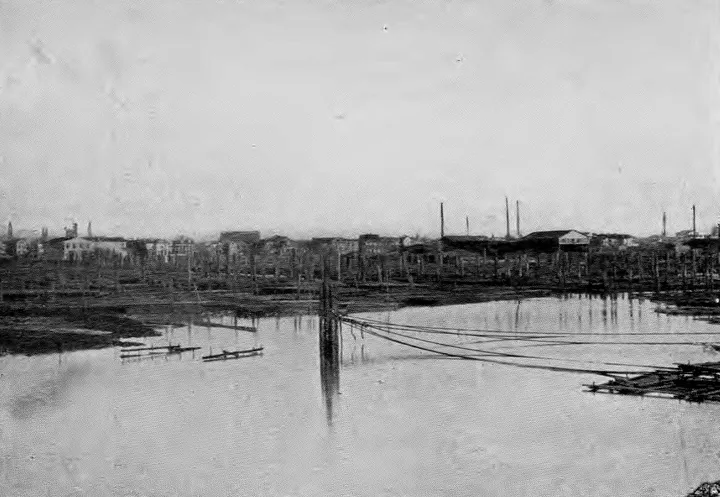
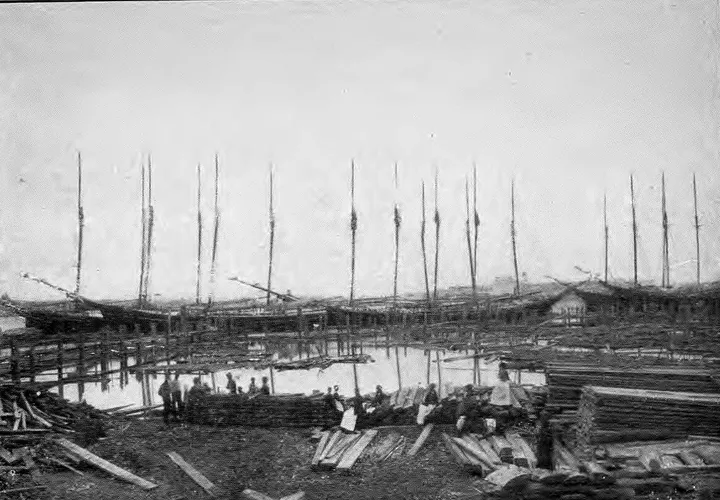
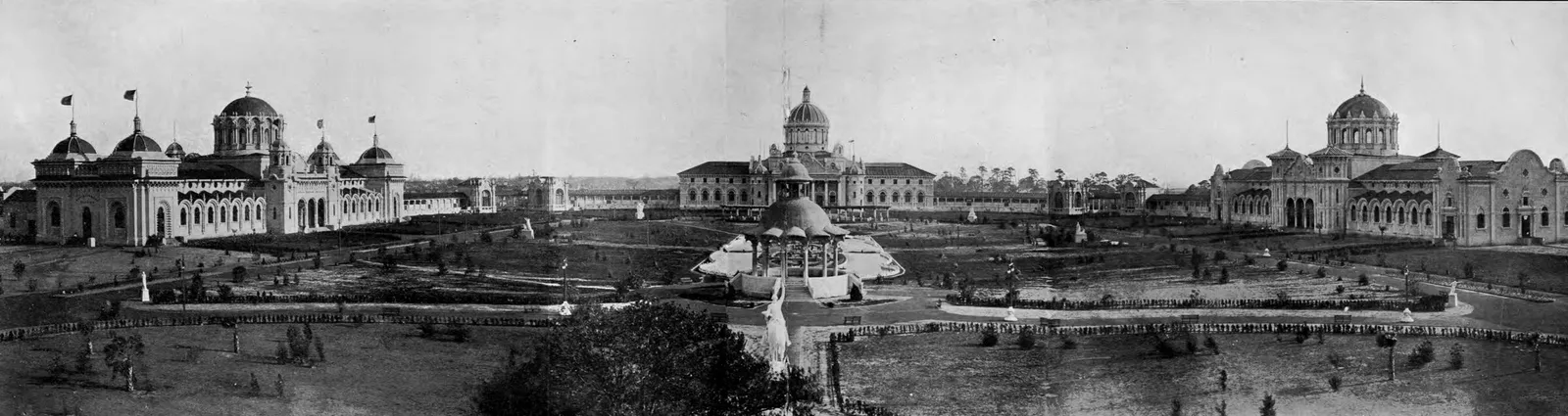
Photographs and text: Charleston and the South Carolina inter-state and West Indian exposition; an illustrated souvenir of the beautiful exposition and of historic places and prominent features of the city (Boston and Charleston: Robert Allan Reid, 1902). Library of Congress, General Collections, call number F279.C4 C47. Public domain; credit line: Library of Congress. The Anderson Lumber Company plate · Court of Palaces panorama · Full record.