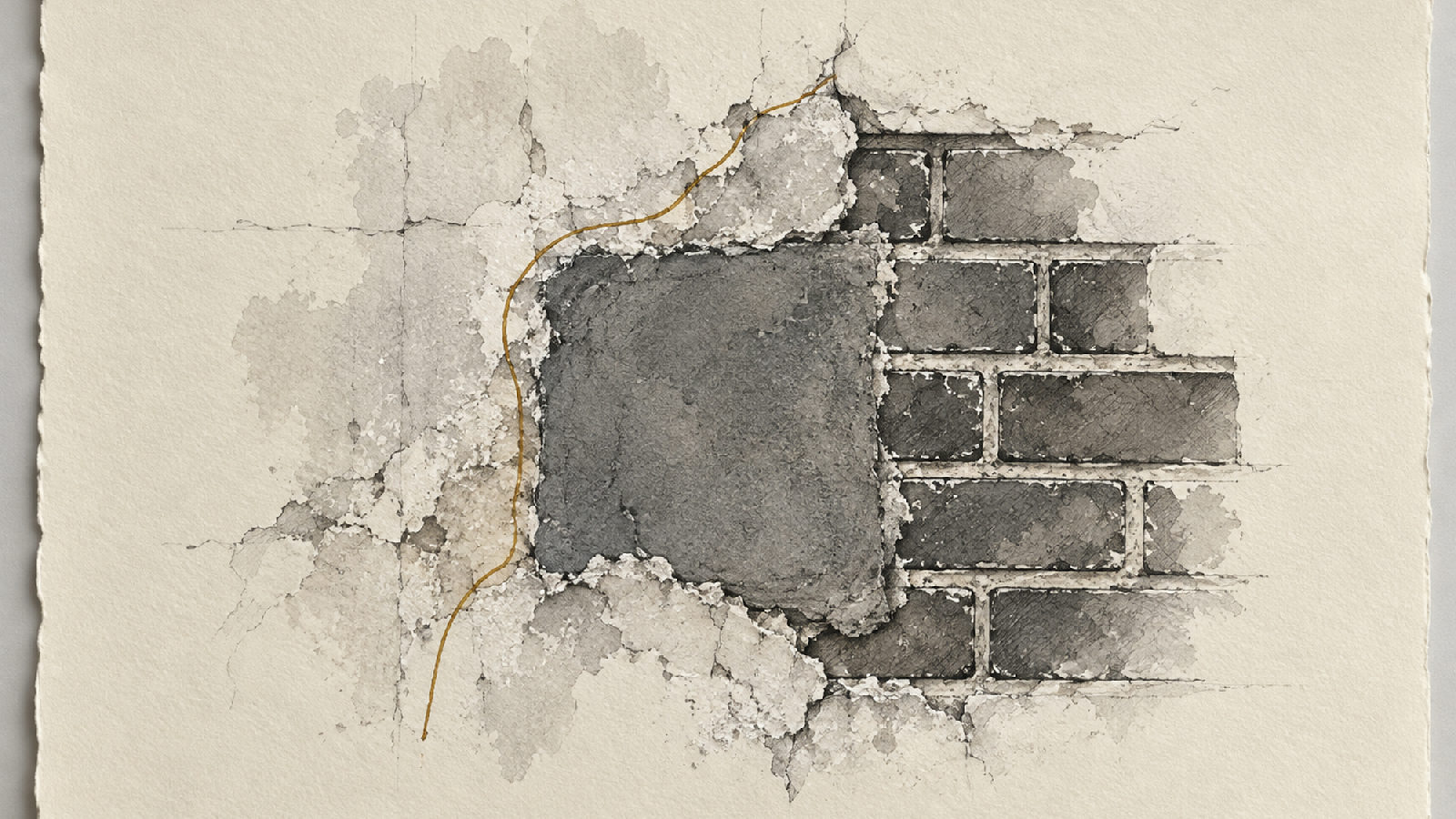
Efflorescence: Reading the White Bloom on Brick and Stucco
The white haze on a brick wall or stucco field is not dirt. It is a message. Salts inside the wall have dissolved in water, migrated to the surface, and crystallized as the water evaporated. Efflorescence in Charleston shows up on garden walls, foundation piers, chimney stacks, and stucco elevations across the peninsula and the Lowcountry. The bloom itself is usually cosmetic. What it tells you about moisture movement inside the wall is not.
Read it correctly and you learn where water is entering, how the wall is drying, and whether the repair you are considering will help or make things worse.
What Efflorescence Actually Is
Three things must be present for efflorescence to form: soluble salts in the masonry or mortar, water to dissolve them, and a path for that water to reach an evaporative surface. Remove any one and the bloom stops.
The salts can come from the brick, the mortar, the substrate behind the stucco, or the ground below. Portland cement contributes salts. So does groundwater wicking up through an unprotected footing. So does a leaking flashing above.
The pattern of the bloom often points to the source. A band near grade suggests rising damp. A vertical streak below a sill points to a failed joint. A diffuse haze across a whole panel suggests the wall is holding water and drying slowly through the face.
Primary Versus Secondary Bloom
Primary efflorescence appears shortly after construction or repair, as free water in fresh mortar or stucco carries salts to the surface during the initial cure. It usually diminishes on its own.
Secondary efflorescence is the one to watch. It appears months or years later, and it means water is still entering the wall from somewhere. That is a moisture problem, not a finish problem. Washing it off without addressing the source only resets the clock.
Reading Efflorescence on Charleston Stucco and Brick
Charleston’s older walls are a mix of soft handmade brick, lime mortars, later Portland repointing, and stucco systems layered over decades of change. Each of those layers has a different vapor permeability. When a hard, low-permeability material is placed over a soft, breathable one, moisture that used to leave the wall harmlessly gets trapped. Salts concentrate. Bloom appears. Over time, the face of the brick or the stucco skin can spall as trapped salts crystallize behind the surface rather than on it.
This is why material-correct repair matters. A lime stucco or lime-rich mortar on a historic wall lets the assembly breathe. A cement patch on the same wall can accelerate damage even when it looks tidy on day one.
What Not to Do
- Do not seal the wall with a film-forming waterproofer. It traps moisture and can drive spalling.
- Do not pressure wash aggressively. Soft brick and lime stucco erode under high pressure.
- Do not repoint with a mortar harder than the brick. The brick will sacrifice itself at the joint.
- Do not assume the bloom is the problem. It is the symptom.
A Measured Approach to Repair
The sequence we follow on assessment is straightforward. Identify the water source first. Confirm the substrate and the existing mortar or stucco composition. Match new material to old for strength and vapor permeability. Allow proper lime cure times. Detail flashings, caps, and grade conditions so water has a path away from the wall rather than into it.
On complex elevations, that often means selective removal of incompatible patches, careful repointing with a matched mortar profile, and a stucco system chosen for the specific substrate. You can read more about how we approach these assemblies on our complex stucco repair page.
Outcomes depend on site conditions, the history of prior repairs, and how the wall connects to roof, grade, and adjacent construction. A careful diagnosis at the front end is what makes the repair hold.
Why This Matters in Charleston
The Lowcountry climate loads walls with water from several directions. Wind-driven rain from the harbor. High ambient humidity most of the year. Salt-laden air near the water. Rising damp through old footings that were never designed with a capillary break. Antebellum and early twentieth-century walls in the historic district were built to manage this by breathing. When later repairs replaced breathable materials with cementitious ones, the walls lost that capacity. Efflorescence is often the first visible sign that the assembly is no longer drying the way it was built to dry.
For owners of historic properties, that signal is worth taking seriously before it becomes spalled brick, delaminated stucco, or interior plaster damage.
When to Call a Specialist
Consider a specialist review when you see any of the following:
- Recurring bloom in the same location after cleaning.
- Efflorescence combined with spalling brick faces or hollow-sounding stucco.
- White staining that appears seasonally, especially after heavy rain.
- Prior repairs that used cement patches on older lime-based walls.
- Bloom on interior surfaces, which usually indicates a more advanced moisture path.
A qualified assessment looks at the whole wall assembly, not just the visible face. That includes roof and flashing conditions above, grade and drainage below, and the compatibility of every layer in between.
Request a Project Review
If efflorescence has appeared on your brick or stucco and you want a considered read on what is causing it, request a project review through our complex stucco repair service page. We will walk the wall with you and outline a material-correct path forward.